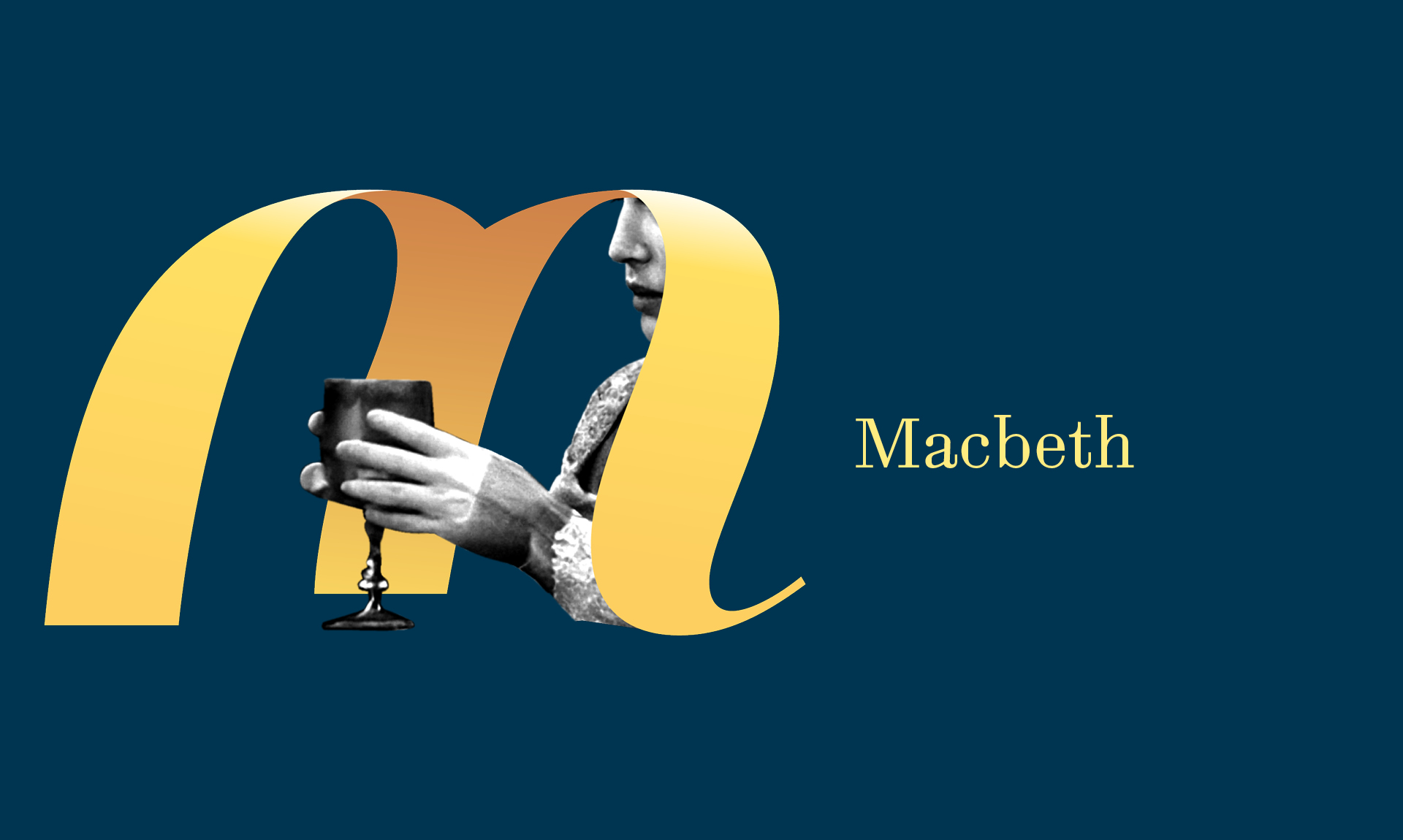
MACBETH
Verdi e Shakespeare
Il Festival Verdi compie 25 anni e pone al centro di questa speciale edizione il tema del rapporto di Giuseppe Verdi con William Shakespeare. “Parlare di Verdi per noi italiani è come parlare del padre” scrive Massimo Mila. A sua volta Verdi, nelle sue lettere, chiama il sommo drammaturgo inglese “papà Shakespeare”, rivelando un legame che va molto oltre l’incontro tra due grandi uomini di teatro. Il programma del Festival vuole offrire l’occasione di approfondire questa relazione, declinandola al presente.
Macbeth (1847 e 1865), Otello (1887) e Falstaff (1893) sono le tre opere di Verdi che attraversando il XIX secolo ne hanno seguito l’evoluzione. Entrando nella profondità della psiche, hanno proiettato in avanti la drammaturgia verdiana, anticipando temi e forme che saranno propri del decadentismo e dell’espressionismo.
Tra le fonti letterarie che lo hanno ispirato, da Schiller a Hugo, è con Shakespeare che Verdi raggiunge gli esiti drammaturgici più compiuti. Così insieme al Gala Verdiano, imperniato su Luisa Miller e Rigoletto, e alla Messa da Requiem, che testimonia la profonda ammirazione per Manzoni, fulcro del Festival sono le nuove produzioni di Otello e Macbeth (1847), realizzate nei laboratori del Teatro Regio, il riallestimento di Falstaff e i percorsi tracciati da Ramificazioni. Stimolante e imprescindibile l’intreccio con il Verdi Off, festival nel festival che celebra la sua X edizione, portando il teatro fuori dal teatro incontro a pubblici sempre nuovi.
Vi aspettiamo per vivere ogni giorno l’emozione unica della musica di Verdi nelle terre del Maestro.
Giuseppe Verdi
Melodramma in quattro parti su libretto di Francesco Maria Piave e Andrea Maffei, da William Shakespeare.
Versione 1847 edizione critica a cura di David Lawton, The University of Chicago Press e Casa Ricordi.
Prima rappresentazione il 14 marzo 1847 al Teatro della Pergola di Firenze.
Dates
Teatro Giuseppe Verdi di Busseto
Saturday 27 September 2025, 8.00 pm
Saturday 4 October 2025, 8.00 pm
Thursday 9 October 2025, 8.00 pm
Friday 17 October 2025, 5.00 pm
Rehearsal Thursday 25 September 2025, 8.00 pm
Act I e II 1 h e 20’
Break 25’
Act III e IV 50’
Running time 2 h 30’
Cast
| Macbeth | VITO PRIANTE (27/09, 04/10, 09/10), ANDREA BORGHINI (17/10) |
| Banco | ADOLFO CORRADO |
| Lady Macbeth | MARILY SANTORO (27/09, 09/10) /MARIA CRISTINA BELLANTUONO (4/10, 17/10) |
| La dama di Lady Macbeth | MELISSA D’OTTAVI* |
| Macduff | MATTEO ROMA |
| Malcolm | FRANCESCO CONGIU* |
| Un medico | EMIL ABDULLAIEV |
| Domestico, Sicario e Prima Apparizione | MATTEO PIETRAPIANA* |
*già allievi dell’Accademia Verdiana
Direttore Francesco Lanzillotta
Regia Manuel Renga
Scene e costumi Aurelio Colombo
Luci Emanuele Agliati
Coreografia Paola Lattanzi
ORCHESTRA GIOVANILE ITALIANA
CORO DEL TEATRO REGIO DI PARMA
Maestro del coro Martino Faggiani
Nuovo allestimento del Teatro Regio di Parma
Spettacolo con sopratitoli in italiano e in inglese
Shuttle Service
Il Teatro Regio di Parma, insieme al Mobility Partner Tep, offre un servizio navetta A/R per gli spettacoli presso il Teatro Verdi di Busseto nei giorni di spettacolo, al costo di 13,00€ + costi di servizio pari a 2,09€, per una spesa totale a carico dello spettatore di 15,09€.
Tutte le corriere partiranno di fronte al Teatro Regio due ore prima l’inizio dello spettacolo. Gli spettatori saranno invitati a presentarsi con congruo anticipo. La corriera per il ritorno partirà 20 minuti dopo la fine della recita a partire dalla medesima fermata utilizzata all’andata.
Per informazioni e prenotazioni biglietteria@teatroregioparma.it
Bus navetta per Busseto, Macbeth, premiére 27.09.25, ore 18.00
Bus navetta per Busseto, Macbeth 4.10.25 ore 18.00
Bus navetta per Busseto, Macbeth 09.10.25 ore 18.00
Bus navetta per Busseto, Macbeth 17.10.25 ore 17.00
Synopsis
Act I
On their return from a victorious battle against rebels, Macbeth and Banco encounter some strange women. Bearded and unattractive, they welcome Macbeth with an obscure greeting, hailing him first as the Thane of Glamis, then as the Thane of Cawdor, and lastly as the King of Scotland. Macbeth is astonished: while it is true that he is the Thane of Glamis, the other titles do not belong to him. Appearing sceptical, Banco also asks for their prophecy as to his future, and the women respond that whilehe himself will never be king, he will fatherone. As soon as the mysterious prophetesses vanish, several messengers on behalf of King Duncan of Scotland reach Macbeth to inform him of his appointment as Thane of Cawdor. The prophecies of the women, whom the two companions now recognise as witches, throw Macbeth into turmoil. At the castle, Lady Macbeth, reads her husband’s letter in which he tells her of the disturbing prophecies. Foreseeing what her husband must do, she realises how desirable but tortuous the road to putting it into practice will be and, knowing Macbeth’s character, fears he will be seized by hesitation. Whilst waiting for King Duncan’s imminent arrival, Lady Macbeth urges her recently returned husband to act, and he does so immediately: following the royal procession, with everyone having retired to their rooms for the night, Macbeth enters the King’s bedroom. As he reappears with a bloody dagger in his hand, his face transformed with terror, Lady Macbeth realises that her husband has carried out his deed only in part. She snatches the knife from his hand, goes into the King’s room, smearshis servants with blood to ensure they will be blamed for the murder, and leaves the weapon near the King’s body. There is a knock on the door. Lady Macbeth leads her husband away. Macduff enters; together with Banco he has the responsibility of waking the King. He feels a sense of imminent tragedy and, having entered the King’s room, rushes out a moment later shaken and distraught. His cries reverberate throughout the castle, causing general disbelief, dismay and bewilderment.
Act II
Duncan’s son, accused of patricide, has run away. Macbeth’s path to the Scottish throne seems all but assured, though the obstacle of Banco’s descendants remains, for the witches had prophesied that his blood line would claim the throne. In one of the castle rooms, Macbeth vents his concerns to his wife: now the prophecy of the witches requires the murder of both Banco and his son. And this will come to pass, incited by Lady Macbeth who, left alone, expresses her pleasure at having been able to convince her husband to act, and thus to tighten their grip on the Scottish throne atany cost. On a sinister night that reminds Banco of the night Duncan was killed, several assassins bludge on him to death, but they fail to capture Fleance, his son, who is able to escape. Informed of the facts during a sumptuous banquet, Macbeth is distressed by the news and shortly afterwards he is haunted by Banco’s ghost sitting at thetable. It throws him into a delirium that startles his guests, and Lady Macbeth attempts to calm him, futilely proposing a toast to distract their companions from the disturbing situation.
Act III
The witches return and meet in a cave, gathered around a boiling cauldron. Macbeth enters to consult with them, but their messages remain uncertain. First an armoured head emerges from the ground, and a voice urges the King to be suspicious of Macduff; then comes a bloody child, and a second voice assuring Macbeth that no one born of a woman will be able to harm him; lastly, the ghost of a crowned child tells him that he will reign until Great Birnam Wood moves towards him. Still not satisfied, Macbeth asks if Banco’s sons will ever reign. At that point, the cauldron disappears and is replaced by a procession of eight kings, the last of which is Banco with a mirror in his hand. Macbeth tries to attack them, but falls to the ground unconscious. During his torpor, the witches evoke nymphs and sylphs to dance overhim. When he comes to, Macbeth passionately declares he is readier than ever to kill Macduff and his family.
Act IV
In the area around Great Birnam Wood, on the border between England and Scotland, Scottish refugees mourn the tragic condition of their oppressed homeland under a king who is shedding blood everywhere. Macduff, whose wife and children were killed by order of the King, is determined to avenge their murder. Then Malcolm, the son of Duncan, arrives, leading the Englisharmy: his plan is to have his soldiers camouflage themselves with large branches from the wood and to slowly advance towards Macbeth’s troops. Meanwhile, in the castle, Lady Macbethis in a state of complete delirium. Under the sympathetic eye of her doctor and lady-in-waiting she sleep walks, believing she has a stain on her dress that she continuously tries in vain to clean, and obsessing about having blood on her hands. In turn, in another room, Macbeth is preparing himself to do battle with Malcolm. He feels the oppression of a life spent without love and compassion. By this stage, he is devoid of any feeling. Even the news of his wife’s death leaves him indifferent; but not so the announcement that Great Birnam Woodis moving towards him. He recognises the prophecy of the witches, yet he is not frightened. He leaves ready for battle and finds himself face to face with Macduff. Their confrontation reveals that Macduff’s life was saved when he was pulled from the womb of his mother, who died giving birth, and Macbeth realises that Macduff is the one who was “not born of a woman”, as thewitches had prophesied. The two can do nothing but fight, and Macbeth will not win. Fatally wounded, he struggles to drag himself along among the prisoners captured bythe English, cursing the moment he trusted the devilish prophesies, while Malcolm is proclaimed the new king of Scotland.